Date: 03/09/2023
Time: 05:00 PM
Location: District Administrative Board Room
Address: 901 Andrade Ave., Calexico, CA 92231
- CUSD Regular Board Meeting – March 09, 2023- Part 2
- CUSD Regular Board Meeting – March 09, 2023- Part 3
Date: 03/09/2023
Time: 05:00 PM
Location: District Administrative Board Room
Address: 901 Andrade Ave., Calexico, CA 92231
Date: 02/23/2023
Time: 05:00 PM
Location: District Administrative Board Room
Address: 901 Andrade Ave., Calexico, CA 92231
Date: 02/09/2023
Time: 05:00 PM
Location: District Administrative Board Room
Address: 901 Andrade Ave., Calexico, CA 92231

In the first newsletter of this New Year. We would like to welcome our new e-board members:
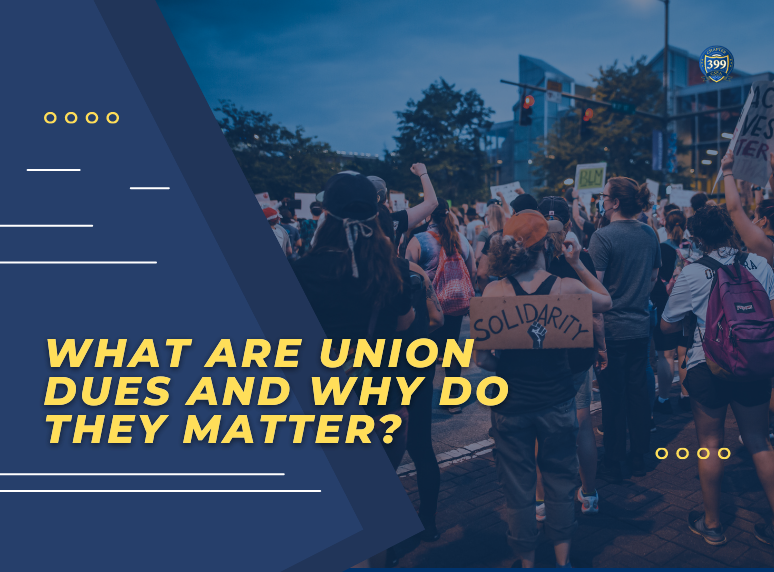
Unions have been a prominent feature in the American labor market for many decades. Unions are organizations that represent the collective interests of employees in a specific industry or profession. They negotiate with employers to ensure that employees receive fair wages, benefits, and working conditions. One of the key components of union membership is the payment of union dues.
If you’re thinking about joining a union, or if you’re already a member. You may already hear the term “union dues”. But what are union dues, exactly, and why do they matter? In this article, we’ll explore what union dues are, how they’re calculated, and why they’re important for both unions and their members.
Union dues are fees paid by union members to support the activities and goals of their union. These fees can vary depending on the union and the industry, but they generally cover the costs of union administration, collective bargaining, and other union-related activities. Union dues can also fund political campaigns or other advocacy work related to workers’ rights and social justice issues.
The funds collected from union dues at Calexico Unified School District are used to support the union’s various activities, including:
The way union dues are calculated can vary depending on the union’s rules and bylaws. Some unions charge a flat rate per member, while others calculate dues as a percentage of a member’s wages or salary. In some cases, unions may also charge initiation fees or assessments for special projects or campaigns.
Union dues are critical to the continued success of labor unions. Here are some of the reasons why they matter:
One of the most important roles of unions is collective bargaining. This process involves negotiating with employers on behalf of union members to secure better wages, benefits, and working conditions. Union dues provide the funding necessary to support this bargaining process. Without this money, unions would not have the resources needed to effectively negotiate with employers, and the bargaining process would suffer.
Unions play a vital role in protecting the rights of employees in the workplace. They represent members in grievances and disciplinary proceedings and advocate for fair treatment and due process. Union dues fund the resources necessary to provide these services to members. Without funds, unions would not be able to provide the necessary legal and financial support to their members.
Many unions provide education and training programs to their members. These programs help members improve their skills and knowledge in their respective fields, making them more valuable employees. Union dues fund these programs, which can help members advance in their careers and earn higher wages.
Unions advocate for policies that benefit working people, such as better wages, workplace safety regulations, and healthcare access. Union dues fund the resources necessary to support these advocacy efforts, including lobbying, political campaigning, and grassroots organizing.
Some people argue that mandatory union dues are unfair because they force workers to support an organization they may not agree with or want to be a part of. These individuals may feel that they should be able to negotiate their own wages and benefits without the involvement of a union.
The right-to-work movement is a political and ideological movement that seeks to limit the power of unions by making it illegal for unions to require workers to pay dues as a condition of employment. Right-to-work laws have been passed in several states in the US, and they are often supported by conservative politicians and business interests.
In 2018, the US Supreme Court ruled in Janus v. AFSCME that mandatory union dues for public sector employees were unconstitutional. This decision has been controversial, with some arguing that it weakens the power of unions and undermines workers’ rights to collective bargaining.
https://www.epi.org/publication/right-to-work-states-have-lower-wages/
- Critics against the right-to-work movement argue that right-to-work laws weaken union power and benefit corporations by limiting the labor union budget.
- Research at the Economic Policy Institute shows that states with RTW laws see higher employment but lower wages for workers.
- The biggest difference between workers in RTW and non-RTW states is the fact that workers in non-RTW states are more than twice as likely (2.4 times) to be in a union or protected by a union contract.
- Average hourly wages, the primary variable of interest, are 15.8 percent higher in non-RTW states ($23.93 in non-RTW states versus $20.66 in RTW states). Median wages are 16.6 percent higher in non-RTW states ($18.40 vs. $15.79).
In summary, union dues are the fees paid by members of a union to support the organization’s activities and initiatives. These fees are used to fund collective bargaining efforts, improve working conditions, provide training and development opportunities, and support strike funds, among other things. While there is some controversy surrounding mandatory union dues, many workers benefit from the collective bargaining power of unions and the improved wages, benefits, and working conditions that they can secure.
If you’re considering joining a union, it’s important to understand the role that union dues play and the benefits that they provide to both the union and its members.
*Thank you for reading! If you have any questions or comments about union dues or anything else related to unions, please feel free to leave them in the comments section below.
Meet CSEA CHAPTER 399 Union Representatives to stay informed and get the most out of your union membership. Union Leaders and Site Representatives can answer questions and provide advice on how to make the most of your employment and union rights.

Chapter President
First Vice President
Second Vice President
Chapter Treasurer
Communications Officer
Secretary
Every school in the Calexico School District has a field representative also known as Union Stewards to back you up and help you stay union strong.
| Krystle Casares | Secretary | CHS | [email protected] |
| Carmela Perez | IA | CHS | [email protected] |
| Alejo Cortez | Custodian | CHS9 | [email protected] |
| Judith Lopez | Secretary | CHS | [email protected] |
| Elizabeth Esqueda | AA at DO | DO | [email protected] |
| Maria Bravo | Specialist | FRC | [email protected] |
| Esperanza Amial | SST | CHS | [email protected] |
| Corina Garcia | IA | CC | [email protected] |
| Jesus Bravo | Technology | DL | [email protected] |
| Maria Arreguin | IA | CHS | [email protected] |
| Alejandro Huezo | Technology | DO | [email protected] |
| Emilio Pinon | Plumber – Skilled | M&O | [email protected] |
| Martha Covarrubias | Proctor | CHS | [email protected] |
| Gabriel Herrera | Pool Operator | CHS POOL | [email protected] |
| Rosa Bermudez | Food Services | CHS | [email protected] |
| Alejandra Zamora | SST | CHS | [email protected] |
| Leslie Barraza | School AA 2 | CHS9 | [email protected] |
| German Angulo | IA | DL | [email protected] |
| Troy Johnson | Area K Director Board of Directors |
| Elizabeth Esqueda | Regional Representative Region 53 |
| Michael Breyette | Field Director San Diego Field Office |
| Ramon Gomez | Senior Labor Relations Representative San Diego Field Office |
The CSEA job steward is a vital representational link between bargaining unit employees, their union, and site-level management. If you are interested in becoming a CSEA Union Steward ask your Union representatives for more information.
Date: 01/19/2023
Time: 05:00 PM
Location: District Administrative Board Room
Address: 901 Andrade Ave., Calexico, CA 92231
Charter schools have become a controversial topic in education policy and labor relations. Supporters of charter schools argue that they provide more educational options for families and promote innovation and competition in education. However, opponents of charter schools, including many labor unions, argue that they undermine public education, reduce teacher job security and benefits, and contribute to the privatization of education. In this article, we will explore why charter schools are bad for school labor unions.
Charter schools are publicly funded schools that operate independently of traditional public school systems. They are granted charters by a state or local authority, which allows them to operate under different rules and regulations than traditional public schools. Charter schools are often run by private companies, non-profit organizations, or individuals, and have more autonomy in hiring, curriculum development, and budgeting than traditional public schools.
Charter schools were first established in the US in the early 1990s as a way to provide more educational options for families and promote innovation and competition in education. Since then, the number of charter schools has grown rapidly, and they now serve over 3 million students in 44 states and the District of Columbia.
Labor unions are organizations that represent workers in collective bargaining with their employers. In schools, labor unions typically represent teachers, support staff, and other school employees. Labor unions negotiate contracts that establish salaries, benefits, and working conditions for their members, and provide legal representation and advocacy for their members in disputes with management.
Labor unions have a long history in the US, dating back to the 19th century. In schools, labor unions became more prevalent in the mid-20th century, and today, the majority of public school teachers and other school staff are members of a union.
Charter schools can have a negative impact on traditional public schools by diverting public funding away from them and creating a two-tiered system of education. In addition, charter schools often have lower unionization rates, which can reduce the job security and benefits of teachers in traditional public schools.
Charter schools are generally less unionized than traditional public schools. According to a 2020 report by the National Education Association, only 11% of charter schools are unionized, compared to 68% of traditional public schools. This means that charter school teachers and staff are less likely to be members of a union, and therefore have less collective bargaining power.
Charter schools often offer lower salaries and benefits than traditional public schools. According to a 2019 report by the Economic Policy Institute, charter school teachers earn, on average, 11% less in salaries than traditional public school teachers. In addition, charter school teachers are less likely to have health insurance and retirement benefits.
Charter school operators have been known to engage in union-busting tactics to prevent their employees from unionizing. These tactics include intimidating employees, making anti-union statements, and even firing employees who support unionization. In some cases, charter schools have closed down or been taken over by other operators to prevent unionization efforts.
There have been several high-profile cases of charter schools and labor unions clashing over labor issues. For example, in 2019, teachers at the Chicago International Charter School went on strike for 11 days over issues such as pay, class sizes, and support staff. The strike was the first-ever strike at a charter school in the US.
Labor unions also argue that charter schools lack accountability and transparency, which makes it difficult for teachers and other school staff to advocate for their rights and for parents to make informed decisions about their children’s education. They argue that charter schools are often run by private companies or non-profit organizations that are not subject to the same level of oversight as traditional public schools.
Charter schools have been criticized for cherry-picking students, which means selecting students based on academic ability, behavior, or other factors that make them more likely to succeed academically. This can lead to segregation and inequity in education, as well as a lower level of academic rigor and challenge for students who are not selected.
Labor unions argue that charter schools contribute to the privatization of education, which undermines public education and reduces the collective bargaining power of teachers and other school staff. They argue that charter schools divert public funding away from traditional public schools, which serve the vast majority of students, and create a two-tiered system of education.
Labor unions also argue that charter schools often have lower standards and qualifications for teachers than traditional public schools. They argue that this can lead to a lower quality of education for students and reduced job security and benefits for teachers.
Charter schools have become a contentious issue in education policy and labor relations. While supporters of charter schools argue that they provide more educational options for families and promote innovation and competition in education, opponents argue that they undermine public education, reduce teacher job security and benefits, and contribute to the privatization of education. From a labor union perspective, charter schools are bad because they reduce unionization rates, offer lower salaries and benefits, engage in union-busting tactics, and contribute to the privatization of education.